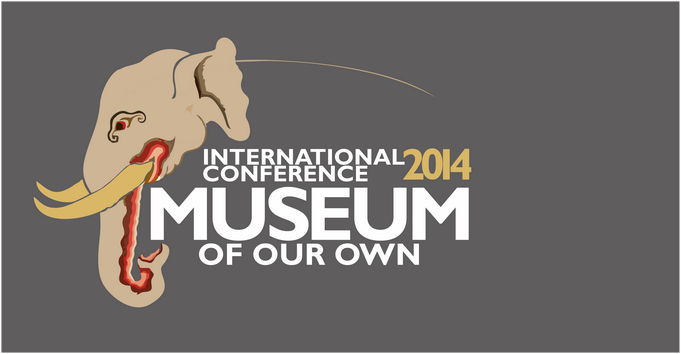
International Conference
Museum of our Own: In search of a local museology for Asia
Department of Archaeology Universitas Gadjah Mada
Yogyakarta, 18th-20th November 2014
Topics and Convenors
While the topics will be developed based the expressions of interest of the potential participants, we already set out five themes that we deem productive for a discussion of these questions, namely:
Writing Museum Histories in Southeast Asia
Convenor: Bambang Purwanto (Universitas Gadjah Mada, Indonesia)
Museums in Southeast Asia emerged at the end of the nineteenth century, through initiatives by both local authorities and colonial governments. Especially in the latter case these museums functioned within a colonial context, as part of a technology of colonial rule. After independence museums in Asia adopted new functions, and were mobilized as part the new national government’s attempt to fashion national narratives. As new museums emerge and old museums try to redefine their missions and visions for contemporary society, what critical histories can we write of these institutions and the ways they have functioned in different Asian societies over the years? In what ways do these histories impact on the current role that these museum play, or can play today? Can any regional tendencies in museum histories and practices be detected in the ways that these museums developed? The conveners of this session want to explore these histories from different perspective looking at the relationship between national and regional histories and the development of museums.
The West and the Rest, the development of the theory of museology
Convenor: Wayne Modest (National Museum of Worldcultures, The Netherlands)
Since Macdonald and Fyfe’s 1998 call for ‘theorizing the museum’ a large and robust body of literature has developed that could be regarded as museological theory. Drawing on different disciplinary frames from anthropology to art history, from history to archeology, much of this theorization has occurred in the so-called ‘West’ with limited attention paid to non-western museum practices. Where calls for a non-western museology have occurred, for example Kreps (date), these have often not taken hold, resulting in little real attempts to think through what such a model for museology could look like? But is there really a need for a non-western museology or are the models that are developed in the west applicable to other places across the world? Should models for museological theory and practices be locally based? If yes what could this look like?
Museum and Heritage
Convenor: Tular Sudarmadi (Universitas Gadjah Mada, Indonesia)
The long existence of museums in countries such as Indonesia as well as the different points of view on collections is inseparable from the dynamics of heritage discourse locally and globally. How do we take these histories as well as past and present heritage discourse into account as we train museums professionals or formulate strategies for more successful museum practices?
Conservation
Convenor: Mahirta (Universitas Gadjah Mada, Indonesia)
Traditional museological practices have maintained rigid rules and standards for preservation/conservation. These rules have for decades been applied universally and are taught through museum training programmes or global heritage governance organizations such as ICOM or ICCROM. More recently, these standards have been questioned, demanding more flexible applications mindful of local situations. But are there ethno-conservation standards or other more locally sensitive procedures acceptable to take care of the museum collections? If yes, how should local standards for preservation be developed and embedded in practices? How do these take ground mindful of collaborative practices across Global North/South divide and discourses of International Development.
Museology Education in Southeast Asia
Convenor: Pim Westerkamp (National Museum of Worldcultures, The Netherlands)
Museums have a long history in Asia and are spread throughout the archipelago. As well, in recent years several new institutions have developed. Mindful of this long history as well as the rapid growth in museums, how should museum education in Asia develop to address growing needs in our countries?